
Images of Northern Edo State
Introduction
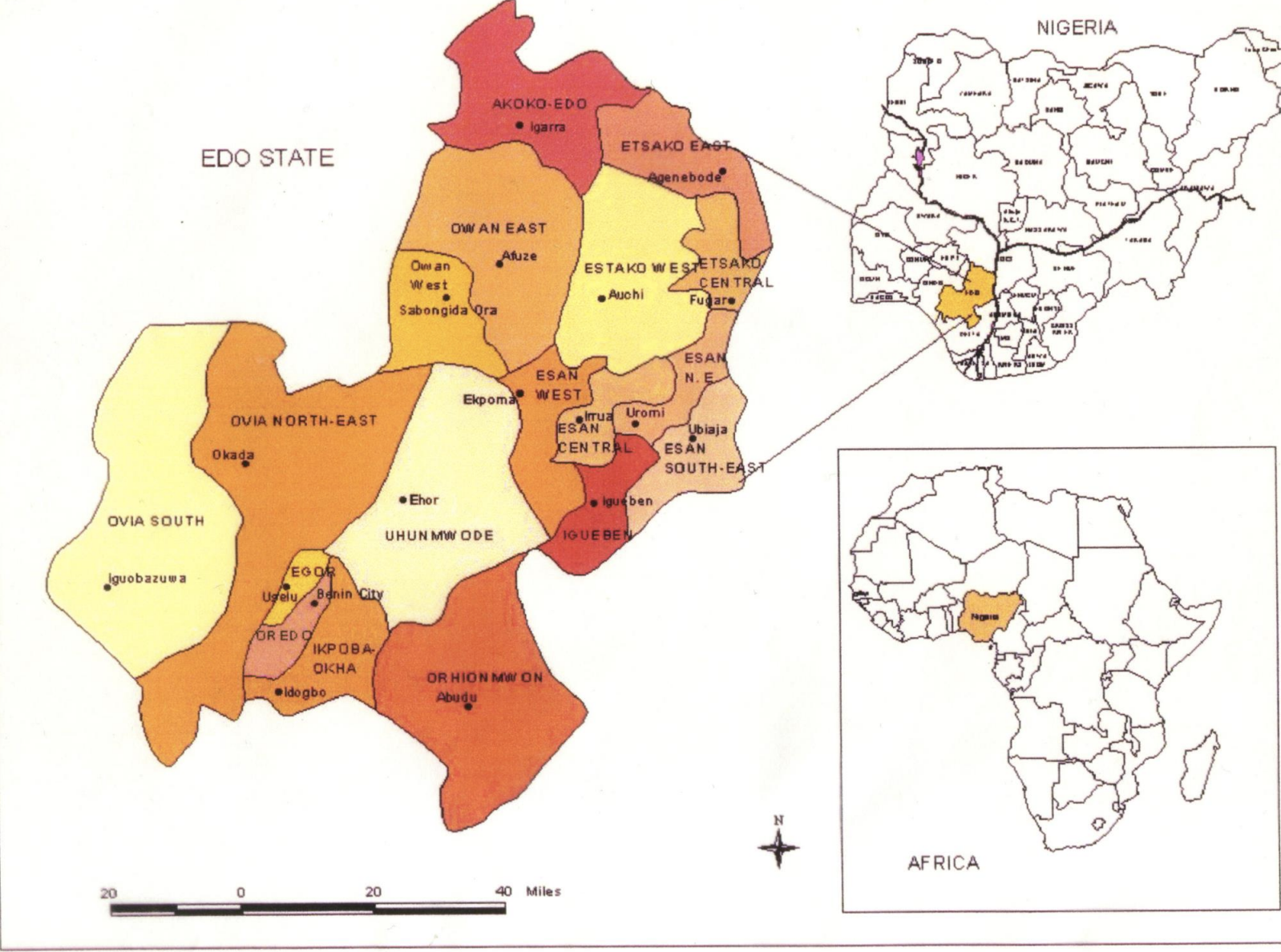
In 2002 Ronald Schaefer, a former professor at Southern Illinois University Edwardsville (SIUE), along with a team of photographers and locals explored a few remote villages in the Northern Edo state of Nigeria. While in these villages, Ronald Schaefer and his team learned about the lives of the Northern Edo people. This page will focus on cultural occupations, housing hierarchy, and sociological/geographic history of the Northern Edo State of Nigeria.
Table of Contents
Methods
Digitizing cassette tapes
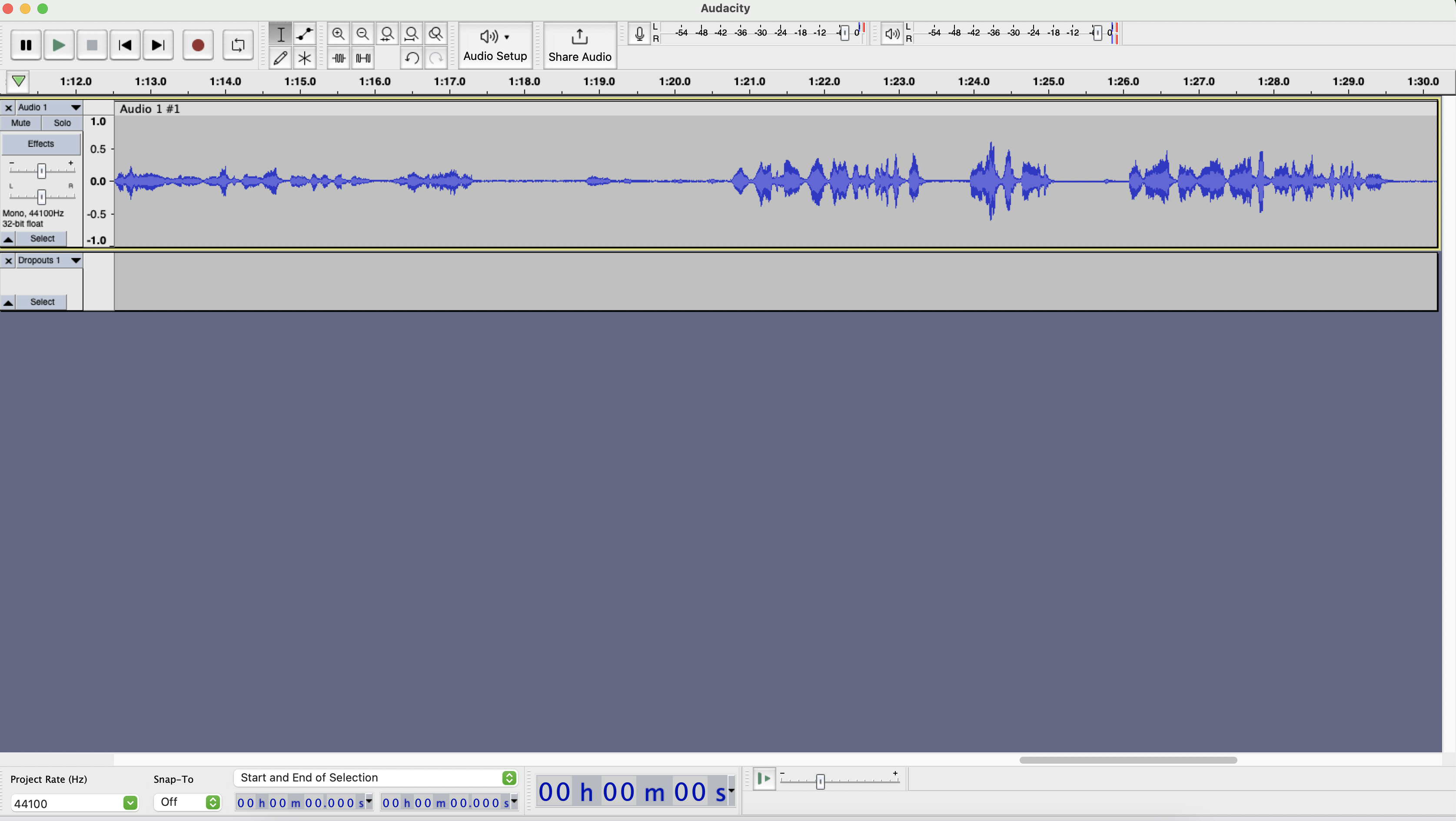
The tapes were all made in 1977. To convert them to WAV audio files, I used Audacity. Audacity is an audio editor and recorder, which allowed me to digitize cassette tapes. In order to digitize cassette tapes, you have to play the recordings in real time while Audacity records the audio. In the instance of the tapes in the Schaefer collection each tape had two sides. Each side was about thirty minutes long, so each tape required sixty minutes minimum of time. Once the tapes were digitized, I was able to upload them to the Schaefer Edoid Archive.
Digitizing Pictures
Digitizing photos is not as complicated as digitizing cassette tapes. All of the photos I work with were on CDs. All I had to do was insert the CD into a CD ROM and download the images onto my computer. From there I was free to rename the files and upload them to the Schaefer Archive.
Research
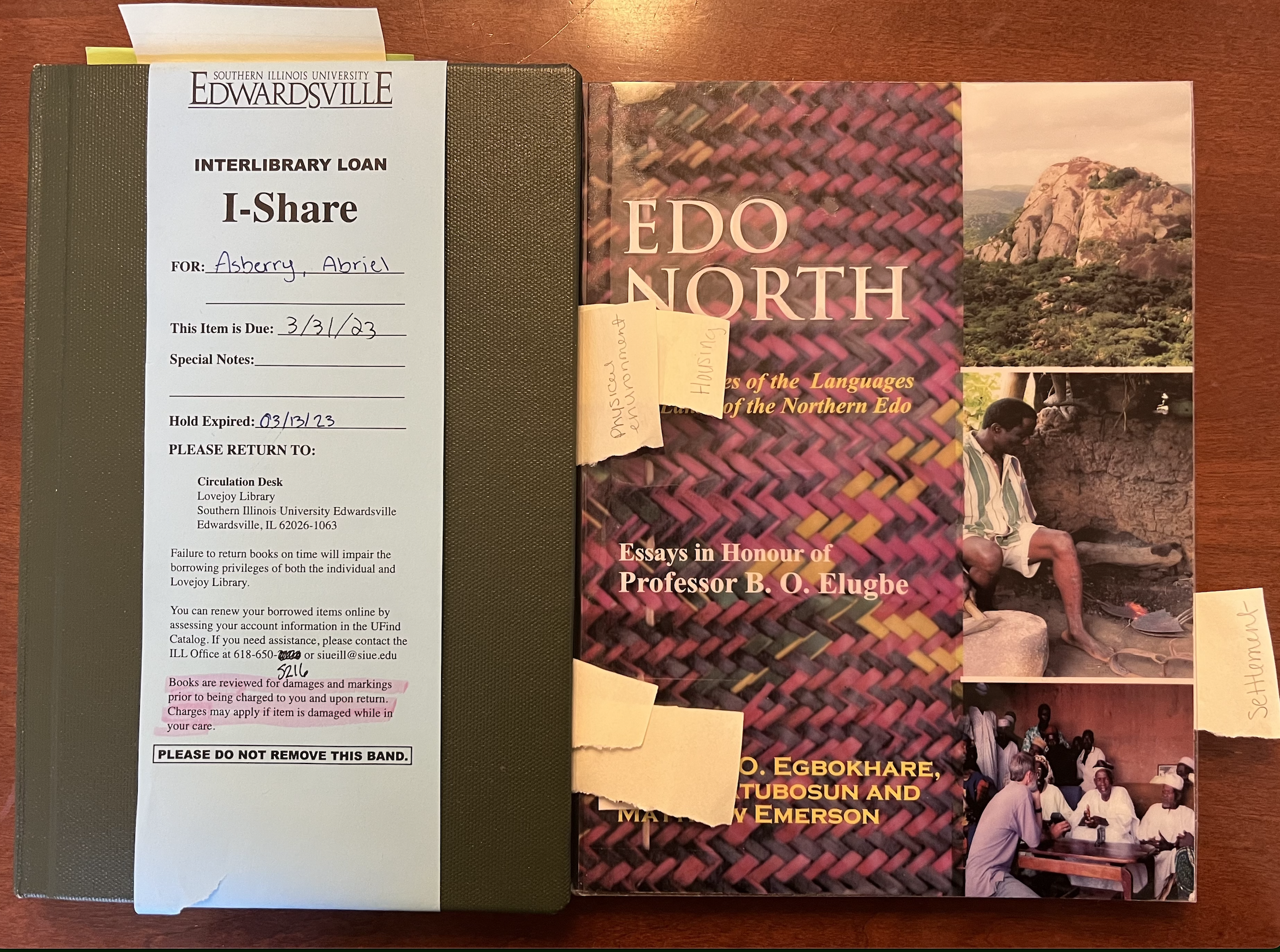
Archiving the cassette tapes and photos were the first step of this project. The next step was conducting research on the North Edo State. Research was essential to giving the tapes and photos meaning. Research was also need to fill out the metadate that went with the tapes and images. In addition to reading, I met with Ron Schaefer. He was able to provide me with an abundance of information. In fact, he was able to help give my project focus. It was hard to make a connection on my own since I was archiving someone else’s work, that was made a while ago.
Significance of Photos
Cultural Occupations
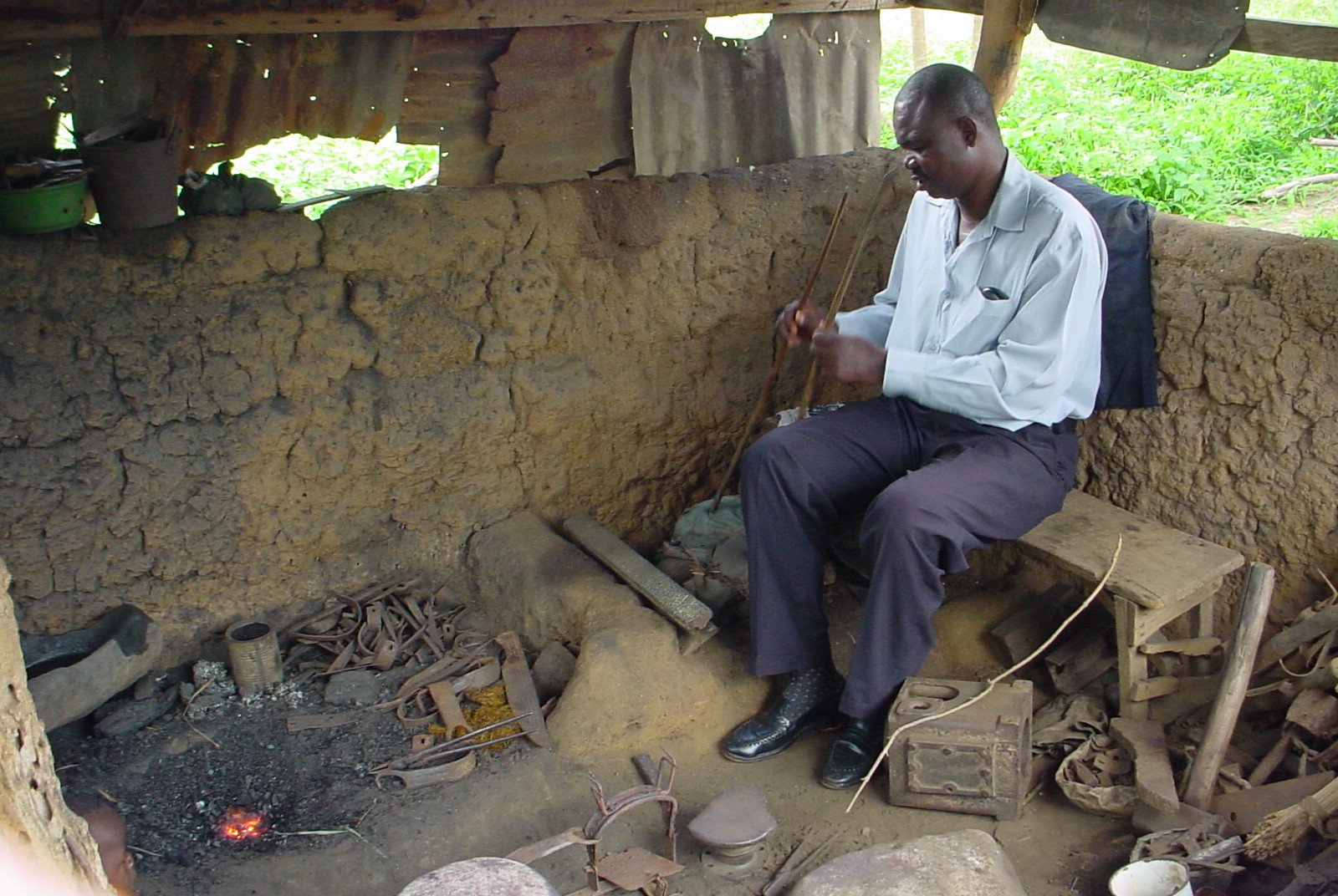
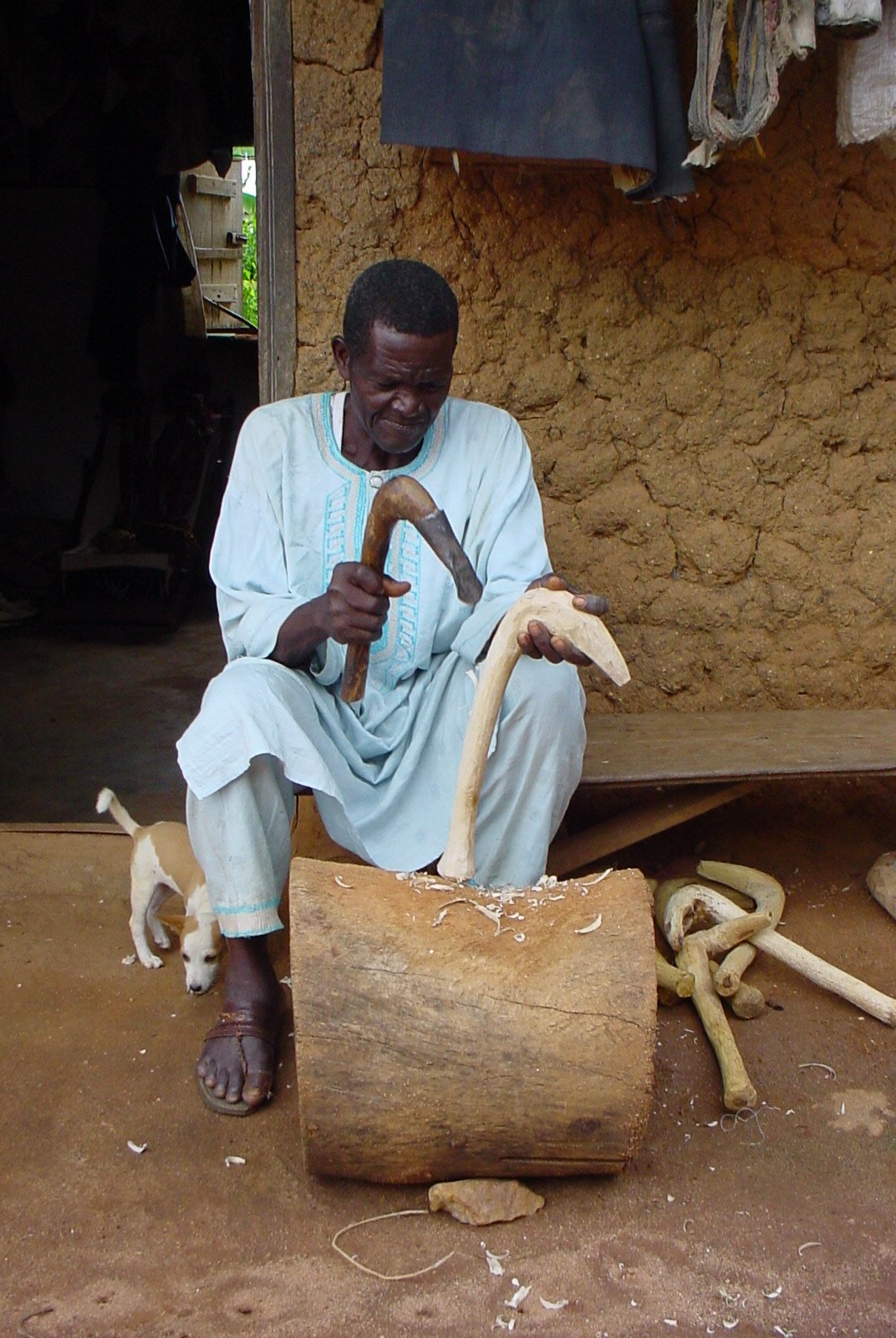
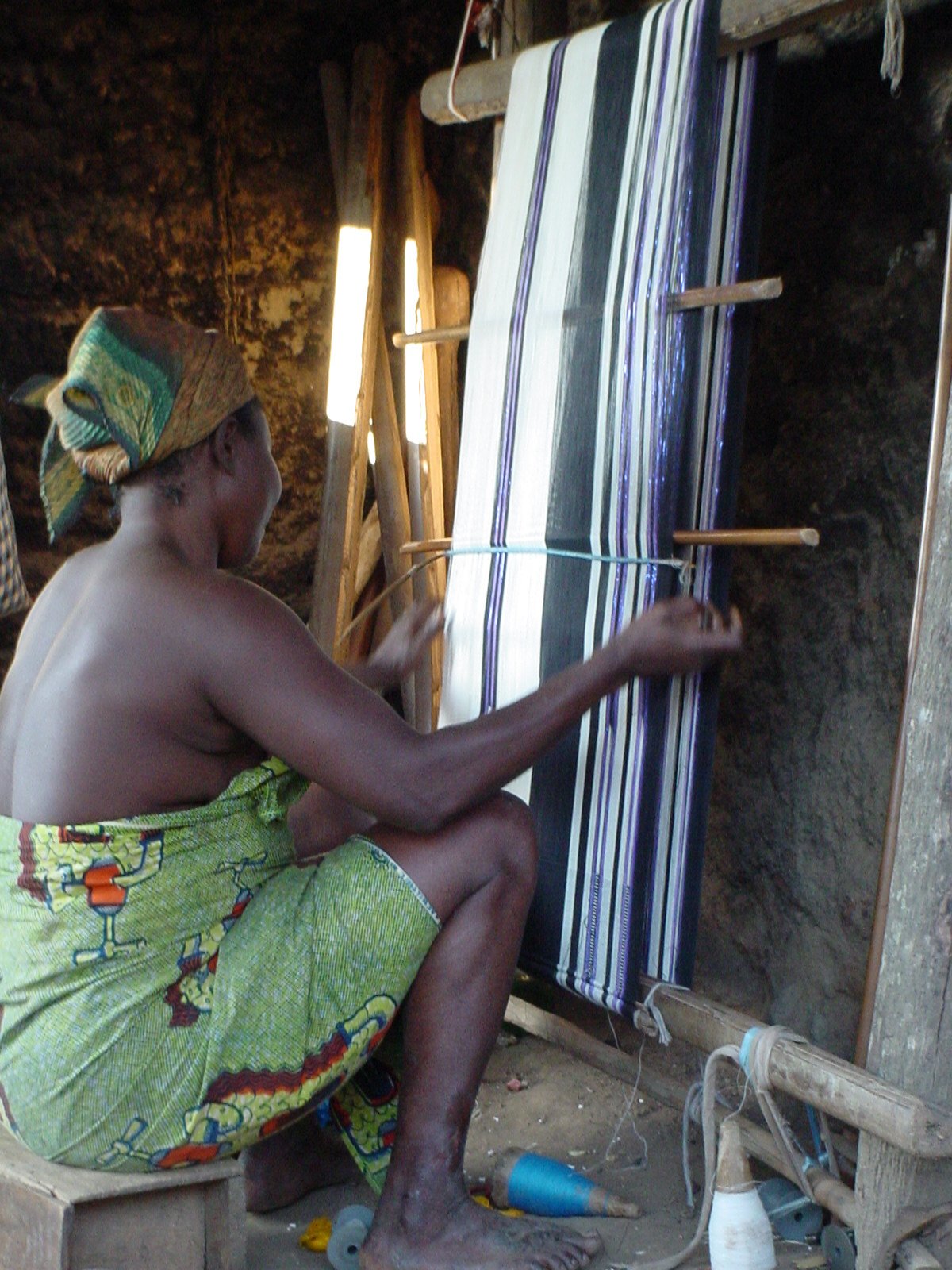
In the Northern Edo state, the occupations of the citizens are pretty set in stone. The occupations are divided by gender. Women typically work with fabrics spinning and weaving. The women start with cotton that is locally grown. They are woven on upright looms to the desired length. In most areas the finished product is usually simple, with colors such as blue and write. However, in the North-West Edo State imported silks and cottons are used to make more intricate designs. Men are usually trained in skills like blacksmithing. Majority of the blacksmithing in this area is done by the Uneme people. These traditional occupations have stayed in place due to the village remote location. This population has no connection to the modern world.
Housing
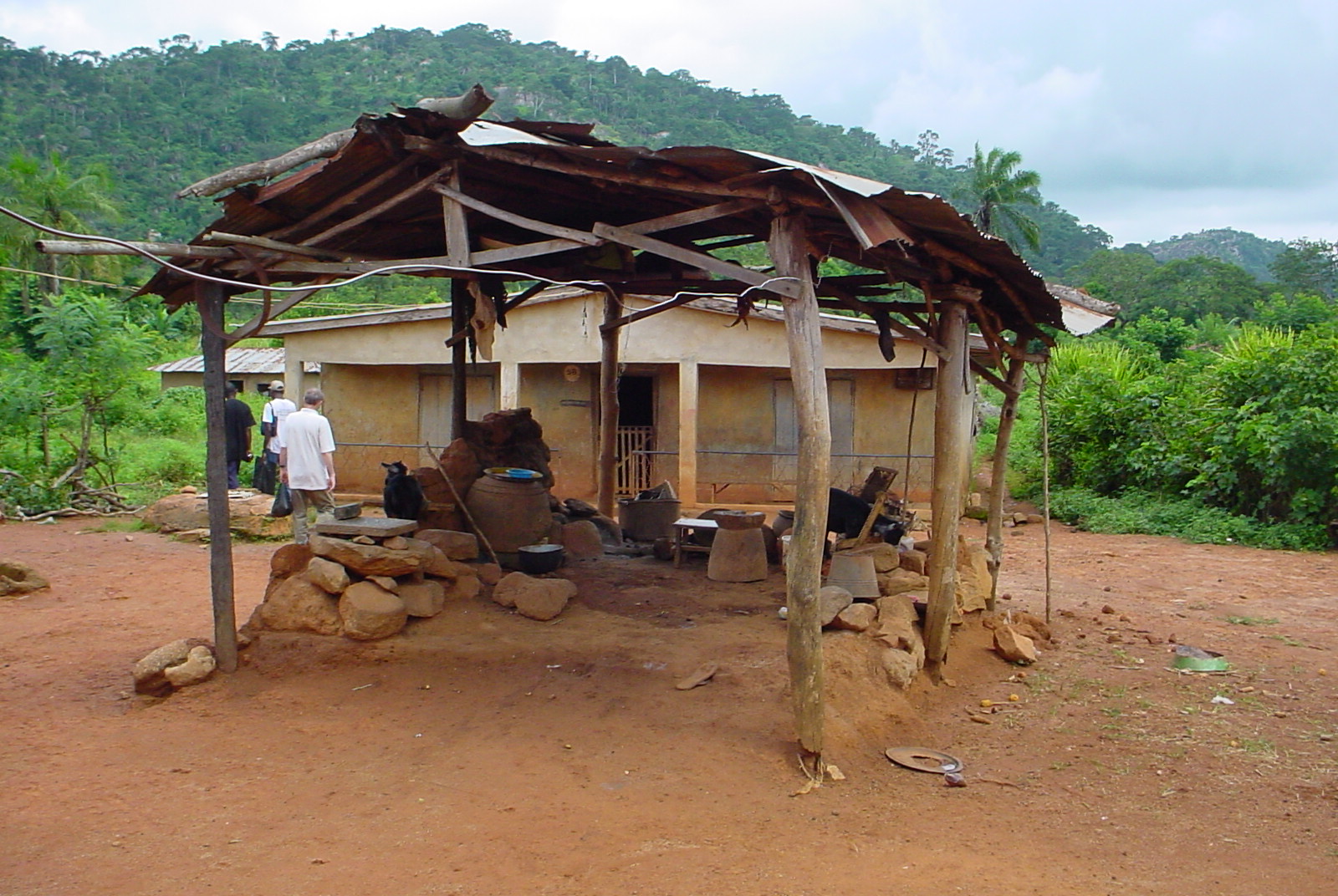
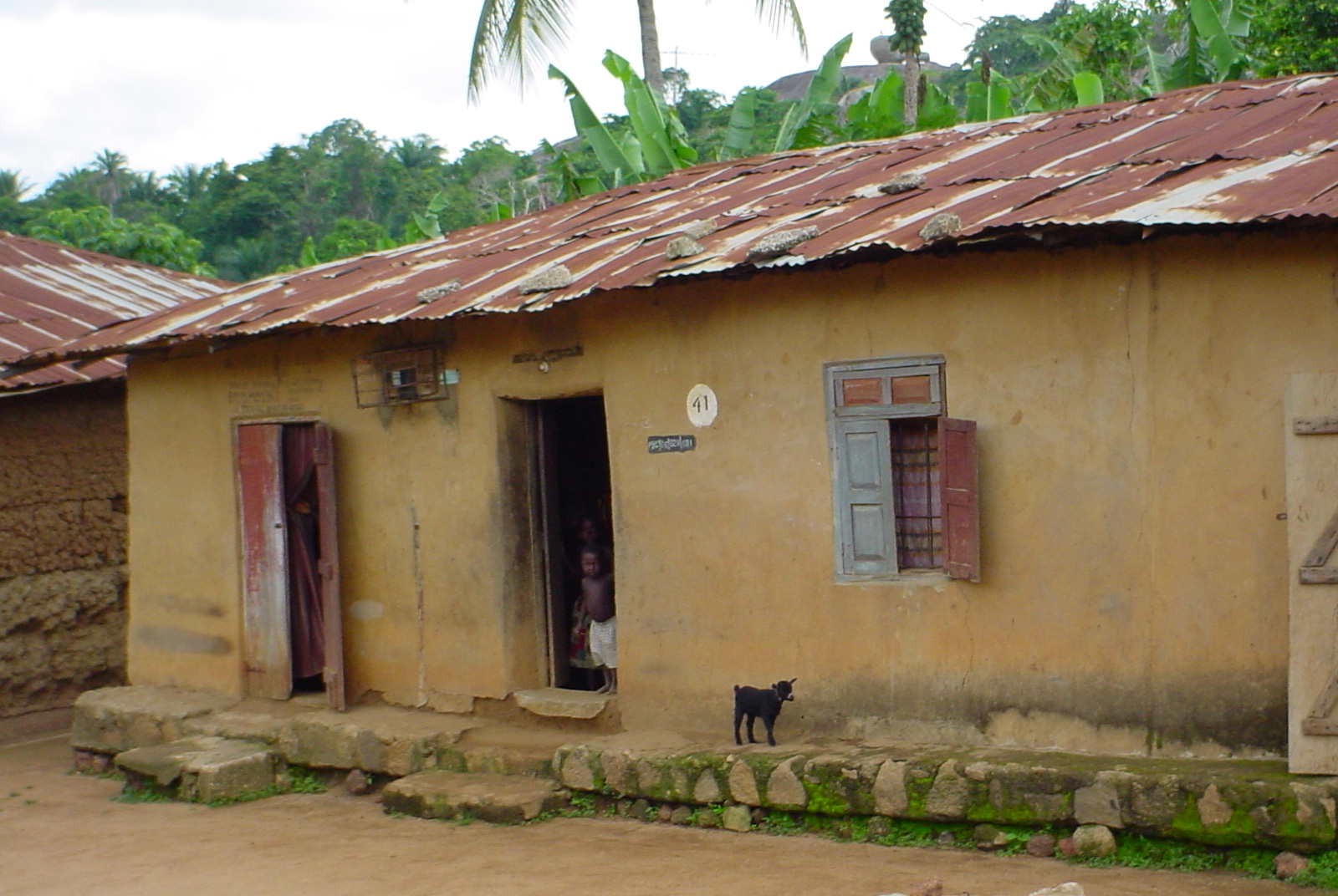
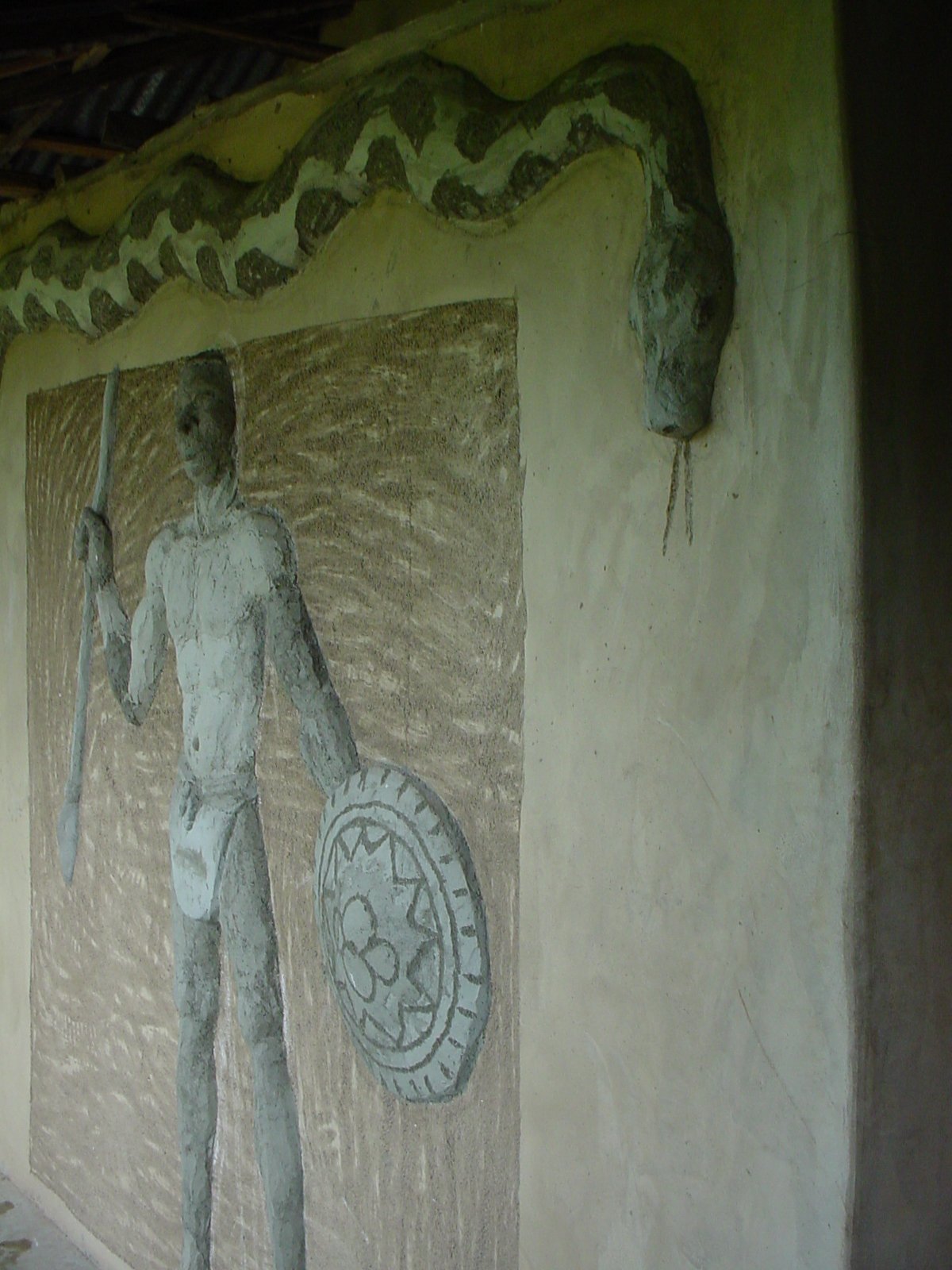
The homes in the Northern Edo-state are mud-built and thatched. In most cases they are built into compounds, with the rooms surround a courtyard. All of the village’s food is prepared in an outdoor kitchen. The mud build houses are a stark difference from the chief’s house. The chief’s house is easy to spot, due to a snake that is adorned to the house to identify that it is in fact the chief’s house.
Sociological/Geographic History
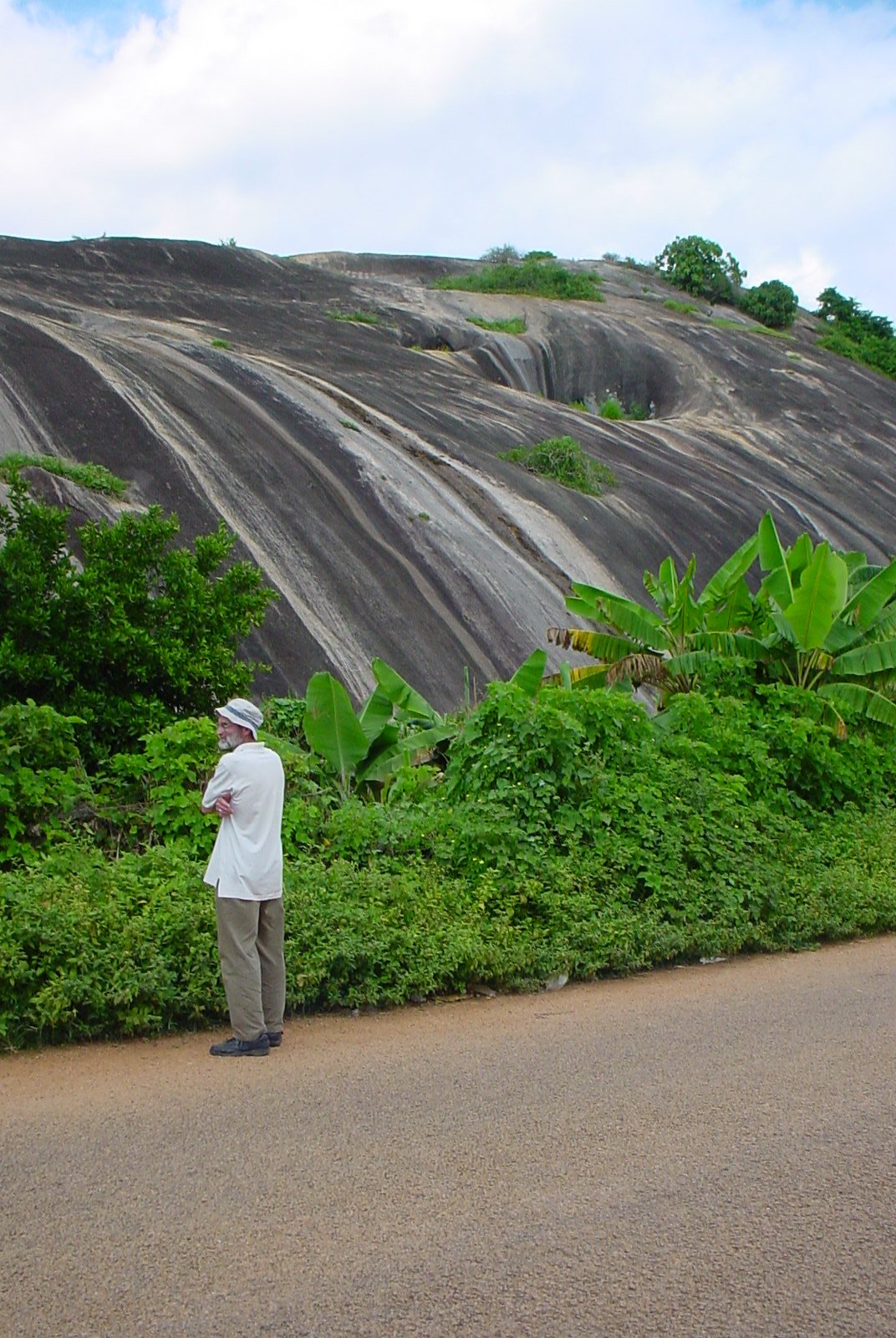
I mentioned in the intro that the village in the Northern Edo state were primarily remote. There is a sociological and geographic reason for this. The people who settled in this area were looking for refuge. They were trying to escape slave raiders, and the geographic landscape helped them do so. The village of Ososo for instance is surrounded by large granite dome, which provided the settlers protection. This type of migration is known as push-pull relocation. There was something in their hometown pushing them, and something in another location pulling them in. Particular to this case, the slave raiders were pushing the migrants out, and the protection of a remote location somewhere else was pulling them in.
Ceremonial Costumes
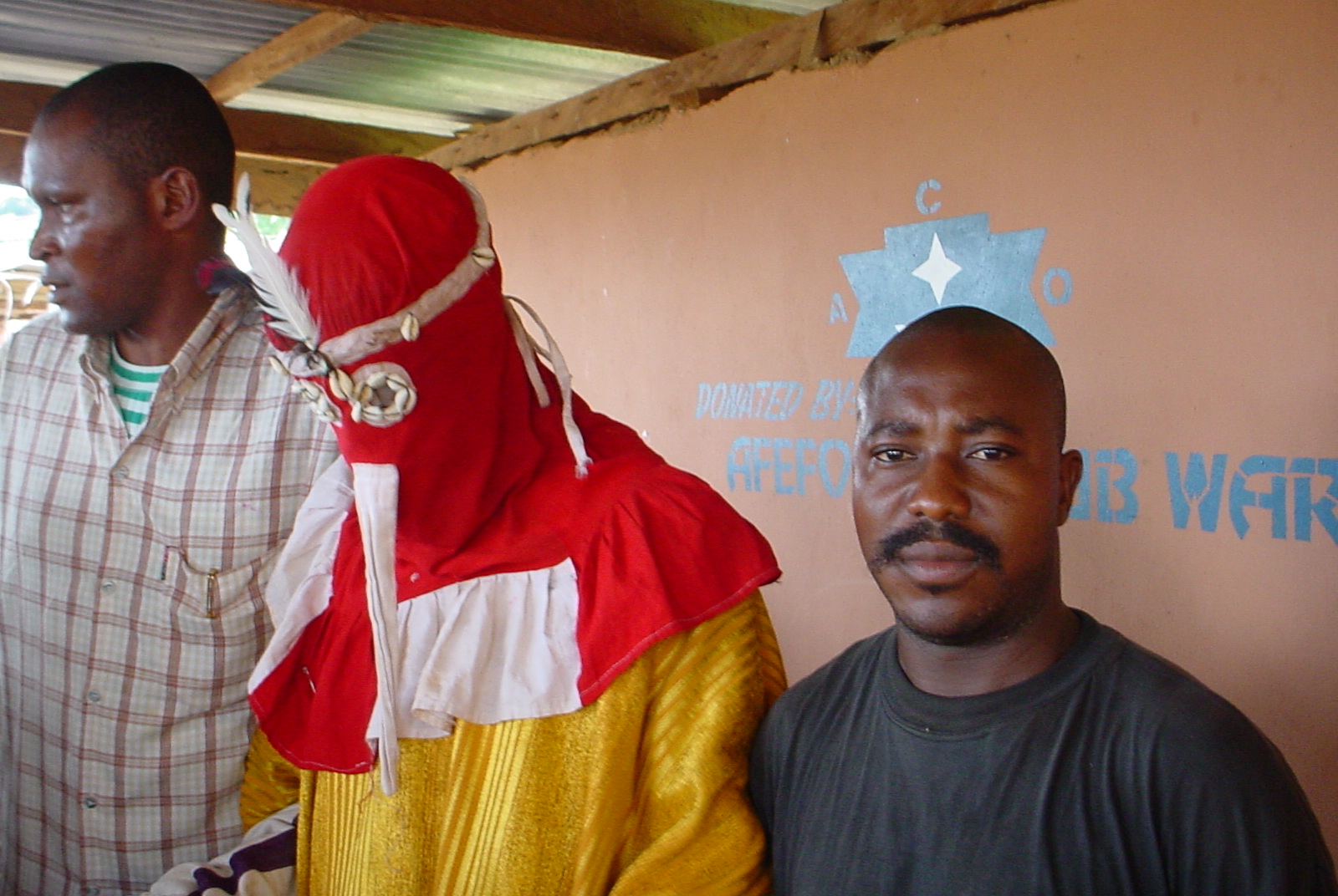
While talking to Ron Schaefer we came across a few pictures of men in ceremonial costumes. We are not quite sure of the significance of the costumes, but felt it would be an important aspect to include in my collection. Ron Schaefer mention in our meeting that these costumes are stored for special occasions. However, Ron was able to get some pictures of these costumes during his 2002 visit.
Conclusion
I concluded my senior project by creating my special collection and an information page to accompany my collection. Creating these two pages has allowed me to reflect on everything I’ve learned. I have learned how to work with old and new technology. The old technology came in the form of cassette tapes and CDs. While I got to learn newer things like TimelineJS (which I used for my project), and how to use HTML to layout my information page. HTML sparked an interest of webpage design for me. I now can see was in which I can use it in my future endeavors. I also learned how to archive someone else’s work. This is the hardest challenge I had to face along the way. I was fortunate that I was able to speak to Ron Schaefer. If he was not able to meet with me, I would have had to relied more on research. Overall, over the last semester I learned how to appreciate how much work goes into a project like this.
References
Bradbury, R. E. The Benin Kingdom and the Edo-Speaking Peoples of South-Western Nigeria. London: International African Institute, 1957. Print.
Egbokhare, Francis O. et al. Edo North : Field Studies of the Languages and Lands of the Northern Edo : Essays in Honour of Professor Ben O. Elugbe. Bodija, Nigeria: Zenith Book House, 2011. Print.